policy brief

Advancing Community-Identified Strategies to Transform Roadways in California’s San Joaquin Valley

Abstract

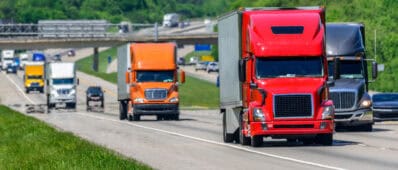
Disparities in exposure to roadway hazards (e.g., pollution, noise) remain stubbornly persistent due to structural inequalities embedded in the built environment. Research has consistently documented racial/ethnic and socioeconomic disparities in traffic exposures nationwide, including heightened exposure to heavy-duty truck traffic, a significant source of noise and pollution. Such disparities also exist in the provision of sidewalks, bike lanes, and street trees, which can help mitigate roadway dust, noise, and pollution and can increase pedestrian safety, encourage walking and cycling, and provide health benefits.

This publication describes how the research team evaluated opportunities and barriers to using a community steering committee process approach to advance environmental justice and transportation equity. Through interviews and case study analysis, the team examined the role community leaders played in the prioritization and implementation of three community-identified strategies that mitigate roadway hazards in three AB 617 communities in California’s San Joaquin Valley – Stockton, South Central Fresno, and Arvin/Lamont. These strategies include (1) vegetative barriers between roadways and sensitive land uses; (2) expanded sidewalk infrastructure; and (3) revised heavy duty truck route designations.

policy brief

What Would it Take for Drivers to Adopt Eco-Driving Behaviors?

Abstract

Climate change in California could greatly impact the state’s economy, nature, and public health. One strategy to reduce fuel consumption and greenhouse gas emissions from the transportation sector is eco-driving. Eco-driving is a set of behaviors or driving styles that encourage fuel-efficient driving that could help minimize energy consumption anywhere from five to 30 percent. With the advance of connected-vehicle technologies, the dynamic eco-driving concept uses real-time vehicle-specific information to optimize vehicle speed and reduce fuel consumption and emissions.

This policy brief finds that driver motivations for adopting eco-driving behaviors varies, perceived ease of use was a key factor influencing a
driver’s intention to use an eco-driving system, and (3) based on the result of the driving simulator experiment, drivers may become distracted while trying to follow the information provided by the eco-driving interface.

research report

Headed Out Less: Analyzing Teen and Young Adult Travel Trends in the 21st Century

Publication Date

August 4, 2025

Author(s)

Andy Fung, Fariba Siddiq, Yu Hong Hwang, Brian D. Taylor

Abstract

Since the turn of the millennium, daily travel per person in the U.S. has been declining. Leading up to the pandemic, travel by older teens and young adults declined even more steeply than among older adults. After collapsing early in the pandemic, per capita travel by all ages has rebounded, but remains below pre-pandemic levels. To explore changes in personal travel, particularly among younger travelers, we examine National Household Travel Survey data from 2001, 2009, 2017, and 2022 to compare measures of everyday travel by youth (aged 15 to 29) with middle-aged adults (aged 30 to 59). The data presented in this report point to even lower levels of youth travel compared to pre-pandemic levels. Trips for all purposes have declined in absolute terms, especially for shopping/errands and, for youth in particular, social/recreational purposes. In relative terms, private vehicle use has increased, and travel by public transit and active modes has decreased. These shifts in personal travel – down overall and toward cars – suggest that pandemic-prompted travel shifts toward fewer out-of-home activities and increased use of information and communications technologies for shopping and other trips may be having enduring effects on personal travel, particularly among younger travelers.

Exploring the Impacts of Working at Home and Online Shopping on Post-Pandemic Travel and Transportation Policy in California

Status

In Progress

Project Timeline

August 5, 2024 - August 31, 2026

Principal Investigator

Project Team

Yage Liu

Campus(es)

UC Berkeley

Project Summary

The COVID-19 pandemic of ongoing changes in the workplace and within households that have significantly influenced travel patterns. Foremost among these are two related trends: people working for pay at home, and increasing household reliance on online shopping and home package delivery. Household travel over this period has markedly changed, with a precipitous falloff in transit ridership and an increase in the share of trips conducted via auto.

This research project explores how working from home and urban freight delivery have shaped household travel behavior in the post-pandemic period. Specifically, the project team will: (i) review empirical literature on trends in working from home and home freight delivery (and the relationship between them) before and during the pandemic; (ii) conduct data description and analysis of four national secondary data sources available through 2022, and explore the relationship between working at home, home freight delivery, online shopping, and patterns in trip frequency and distance by mode; (iii) conduct an online survey in one or more large metropolitan areas in California to explicitly investigate current self-reported and pre-pandemic household behavior, focusing on working at home, online shopping, home freight delivery, and travel behavior as mediated by occupation, income, neighborhood characteristics, and race/ethnicity; and (iv) as a final step, explore policy and planning responses by regional and local agencies.

Steering California’s Transportation Future: A Report on Possible Scenarios and Recommendations

Status

Complete

Project Timeline

January 19, 2022 - July 14, 2022

Principal Investigator

Project Team

Campus(es)

UCLA

Project Summary

What will California’s transportation and land use future look like? Will Californians gain more mobility and housing options that support the state’s economic, social, and climate goals? Or will the car continue to shape what cities look like and how people get around in them? These questions are important because how Californians live and move in the future will be shaped by investments and policies made today. In this project, the researchers investigated the future of transportation, land use, and planning in California by exploring four transportation/land use scenarios for 2050 with a panel of 18 experts. The four scenarios were: (1) more city living and lots of traffic, (2) easy to get around without a car, (3) you’ll need a car to get around, and (4) lots of travel choices, but most will drive. Their consensus opinion was that the most desirable scenario (“Easy to Get Around without a Car”) is also the least likely to materialize, due to faults in the political planning process. Despite promising state policies to increase transportation choices, problematic local land use politics and patterns appear likely to yield a future scenario (“Lots of Travel Choices, but Most Will Drive”) that continues car dependence and chronic congestion, absent a significant rebuilding of government trust and capacity.d

Evaluating Place-Based Transportation Plans

Status

Complete

Project Timeline

September 22, 2022 - September 30, 2023

Principal Investigator

Project Team

Campus(es)

UCLA

Project Summary

California has increasingly turned to place-based, community-driven programs such as Transformative Climate Communities (TCC), the Community Air Protection Program (CAPP), and Regional Climate Collaboratives (RCC) to address the twin priorities of climate change and environmental justice. Transportation improvements are at the heart of these programs because of the potential to mitigate air pollution, greenhouse gas emissions, and inequities in access to transportation. However, these efforts are inherently difficult to evaluate as they often involve a diverse set of projects with different timelines and locations. Moreover, evaluators often face the challenge of isolating the effects of individual programs. Carefully selected control sites can support this effort, but no two communities are exactly alike, limiting the ability of evaluators to make meaningful comparisons. This research addresses how place-based climate action efforts are being evaluated, and what insights from the broader policy and plan evaluation research literature might inform evaluation design. The focus is on place-based, community-driven programs in California that encompass multiple interventions to address intertwined issues of transportation justice, climate change, and air pollution. While TCC, RCC, CAPP, and the Sustainable Transportation Equity Project (STEP) are the most high-profile programs, the project will also consider planning grants such as Sustainable Communities Planning Grants and Community-Based Transportation Plans. For each funded program site the research team will review planning and evaluation documents and annual reports to compile a dataset of data collection and evaluation activities classified by (1) type of activity being assessed (planning vs. implementation), (2) evaluation indicator (e.g. air quality, transportation accessibility), (3) data source (e.g. interviews, air sensors), and program design (e.g. cross-sectional vs. longitudinal, inclusion of control sites). The research team will complement the review of these documents with 10-20 key informant interviews with staff from state and local agencies to help understand how the evaluations are proceeding in practice, and which aspects of place-based program evaluations have proved most valuable, challenging, and scalable to other programs.

New Methods for Integrating Traveler Constraints and Travel Demand Modeling

Status

Complete

Project Timeline

September 20, 2022 - March 31, 2025

Principal Investigator

Project Team

Tat Srisan

Campus(es)

UCLA

Project Summary

Advancing the tools needed for equity analysis of transportation investments requires new frameworks that consider the real world conditions of vulnerable communities and link to travel behavior analysis, transportation infrastructure, and policy assessment practices. Large-scale urban travel demand models (made up of a system of linked discrete choice models) are widely used to evaluate the costs and benefits of transportation investments and are employed during the transportation decision-making process. Yet, absent from this classic framework is the role that systematic constraints play in shaping opportunity spaces for certain travelers, which can skew assessments of transportation costs and benefits and drive inequitable and harmful transportation investments.

This research project will develop a methodological framework for extending travel demand modeling, to explicitly integrate constraints on traveler decision-making, such as racial and income disparities in access to travel alternatives. This framework requires new approaches of modeling traveler choice sets, and using non-traditional data sources, such as data on auto insurance premiums and auto loan availability. Developing methods to integrate such traveler constraints requires innovation in the measurement of latent effects that vary across communities and how best to associate these effects with the travel choice generation process.

The required research activities include a literature and data review, testing of measurement approaches and choice model structures for capturing traveler constraints, and performing a series of statistical and model checking tests, to arrive at clear recommendations for improvements in modeling practices.

Road Infrastructure Resilience Improvement for Wildfire Hazards

Status

In Progress

Project Timeline

February 3, 2025 - June 30, 2027

Principal Investigator

Project Summary

The recent wildfires in Los Angeles County have exposed severe vulnerabilities in the region’s road network, especially in hillside and canyon neighborhoods. These areas often feature circuitous, poorly connected street layouts with narrow roads and limited evacuation routes, creating dangerous bottlenecks during emergencies. In the January 2025 wildfires, gridlocked traffic at critical choke points forced residents to abandon vehicles, further complicating evacuation efforts and delaying emergency responders. These challenges underscore the urgent need to address inadequate street connectivity in wildfire-prone areas. Climate change-driven increases in wildfire frequency and intensity exacerbate these risks by raising the likelihood of extreme events that outpace current evacuation and response capabilities. Existing research on wildfire hazards often focuses on evacuation strategies or overall system resilience. Still, it rarely examines how street network design impacts evacuation efficiency and wildfire resilience at a network-wide scale. Furthermore, traditional risk-based approaches fail to consider cascading impacts on interconnected road systems

To tackle these issues, this project has initiated hyperlocal data collection in wildfire-affected regions of Los Angeles using a cutting-edge mobile mapping platform equipped with a Kaarta device. This system captures high-resolution LiDAR and panoramic imagery, enabling precise assessments of road widths, connectivity, and vulnerabilities in real-world conditions. By integrating wildfire simulation, connectivity analysis, and resilience assessment to prioritize retrofitting needs, this study will provide actionable recommendations for evacuation planning and infrastructure resilience in Los Angeles County.

After the Crash: Post-Collision Travel Behavior and Safety Perceptions

Status

Complete

Project Timeline

October 1, 2023 - September 30, 2024

Principal Investigator

Project Team

Jesus M. Barajas, Md. Musfiqur Rahman Bhuiya

Project Summary

Over the past five years in California, there were an average of over 3,800 fatalities, almost 15,900 serious injuries, and more than 233,100 minor injuries each year resulting from vehicular collisions. These collisions disproportionately affect individuals from socioeconomically disadvantaged backgrounds, including people with disabilities. Despite the physical and mental harm suffered by collision victims, little is known about how these incidents impact their travel behaviors, such as travel frequency and mode choices. Reduced travel frequency could potentially harm socioeconomic equity, as victims who travel less may be less active in the economy as workers or consumers. This effect is likely to be more pronounced for people with disabilities, who already face disadvantages in terms of access and mobility. Furthermore, shifts away from public or active transportation options in favor of other modes may undermine the other state goals, including reducing greenhouse gas emissions from transportation.

Interviews with professionals who work with individuals affected by road collisions reveal that there is no systematic collection of data regarding the effects of such collisions on individual travel behavior. This project aims to fill this gap by conducting focus groups with individuals who have experienced road collisions. The focus will be on their safety concerns and transportation priorities. Specifically, this project aims to address: i) how collisions or near misses impact travel frequencies and mode choices, especially for individuals with disabilities, and ii) how experiences with collisions or near misses make people more likely to use single-occupancy vehicular modes like driving, riding as a passenger, or using taxis, ride-hailing services, or paratransit. This research builds upon an ongoing project where the researchers are collaborating with community-based organizations across California and medical professionals who work with road collision survivors. The goal is to understand the transportation concerns expressed by these individuals. This project will conduct six focus groups. Participants will generate ideas and comprehensively explore the issues and concerns raised. In each session, participants will be asked about their travel habits, transportation concerns, and specific road safety worries. The insights gathered will inform policy recommendations related to road safety, transportation equity, and reducing greenhouse gas emissions. They will also guide future research efforts, including a more extensive survey to better understand how experiences with road collisions affect travel behavior.

Investigating Unmet Travel Needs in Disadvantaged and Rural Communities: Can Sustainable Transportation Meet these Needs?

Status

Complete

Project Timeline

May 1, 2025 - September 30, 2025

Principal Investigator

Project Team

Jesus M. Barajas, Weijing Wang

Campus(es)

UC Davis

Project Summary

Disadvantaged, low-income, rural, and tribal communities, often collectively referred to as underserved or priority populations, have less access to transportation infrastructure, face more barriers in getting around, and are underrepresented in the transition to sustainable and electric transportation. Using results from a California wide questionnaire survey that overrepresents priority populations, we will investigate unmet and suppressed travel needs, whether sustainable transportation can meet those needs, and what policy, practice, and infrastructure interventions can support sustainable transportation in these communities. The research will give insight into communities that are typically not included in large numbers in travel surveys, which means their transportation needs, unmet and suppressed travel needs, and any barriers they face in adopting sustainable transportation are as not well understood in quantitative research. The results will inform policy, practice, and infrastructure programs that aim to create a more equitable and just transportation system by providing insight on the nature of unmet and suppressed travel, including types of destinations (e.g., work, education, health) populations cannot access or have difficulties in accessing, their preferred mode to reach that location, and whether sustainable transportation can meet these unmet needs (in addition to meeting currently met needs).